Who Goes There? Winter Tracking is Fun!

Coyote Track
We’re surrounded by wildlife, but we often don’t know it’s there. While some of our wild neighbours are easy to spot, like squirrels and backyard birds, others are shy, furtive to the extreme of adopting nocturnal habits to avoid humans.
But winter’s white tapestry blows their cover.
On a ski, snowshoe or hike you discover that a rabbit crossed the trail, a coyote trotted across the meadow, a flock of wild turkeys scratched for food in a cornfield, a few white-tailed deer actually followed the trail itself. In a back yard, a raccoon checked for tasty leftovers, and squirrels hopped everywhere, checking for the nuts and seeds that they buried last fall (or visiting local restaurants that we call bird feeders).
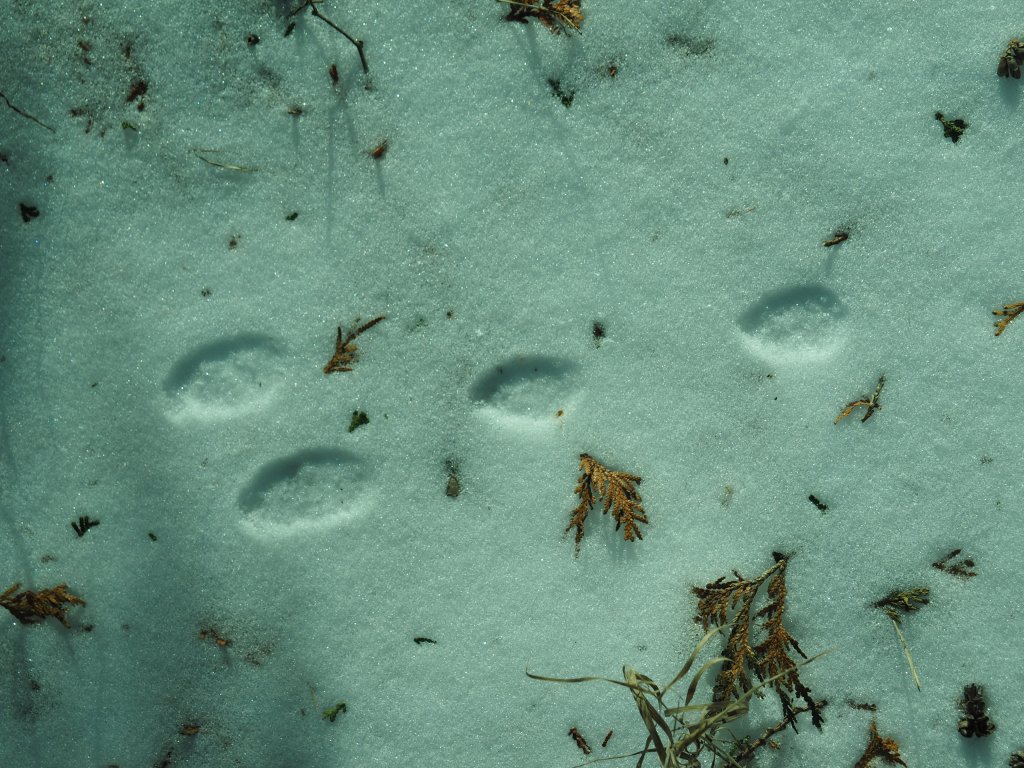
Knowing who made the tracks and what the animals were doing is an ancient art. It was vital to indigenous hunters in our area over thousands of years, and some continue the tradition. The best trackers can work all year, reading many clues that seem invisible to most of us. But snow cover makes tracking accessible and fun for anyone outside in winter.
To me, it’s like solving a puzzle, finding out who the characters are in the mystery novel whose story is revealed by snow.
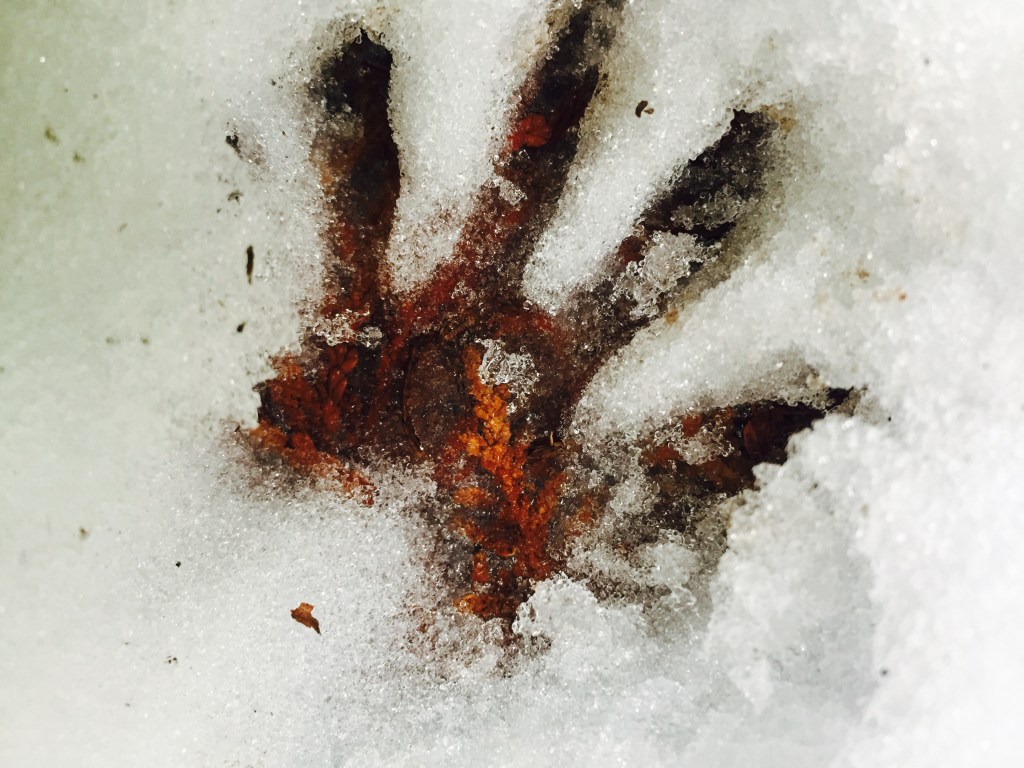
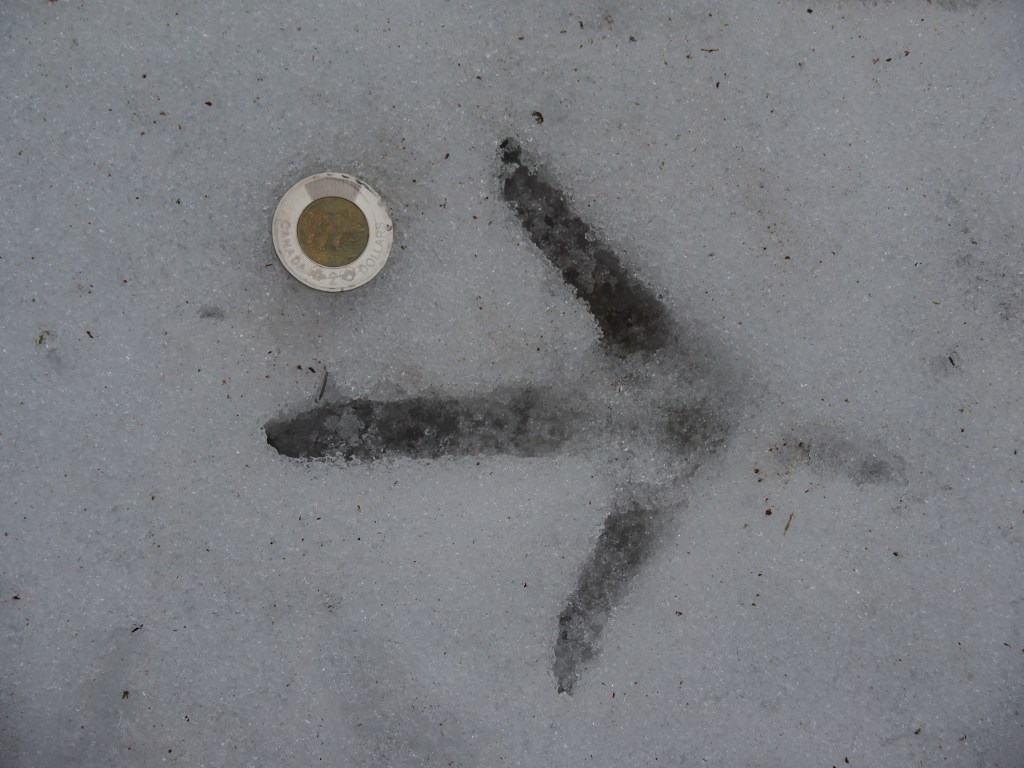
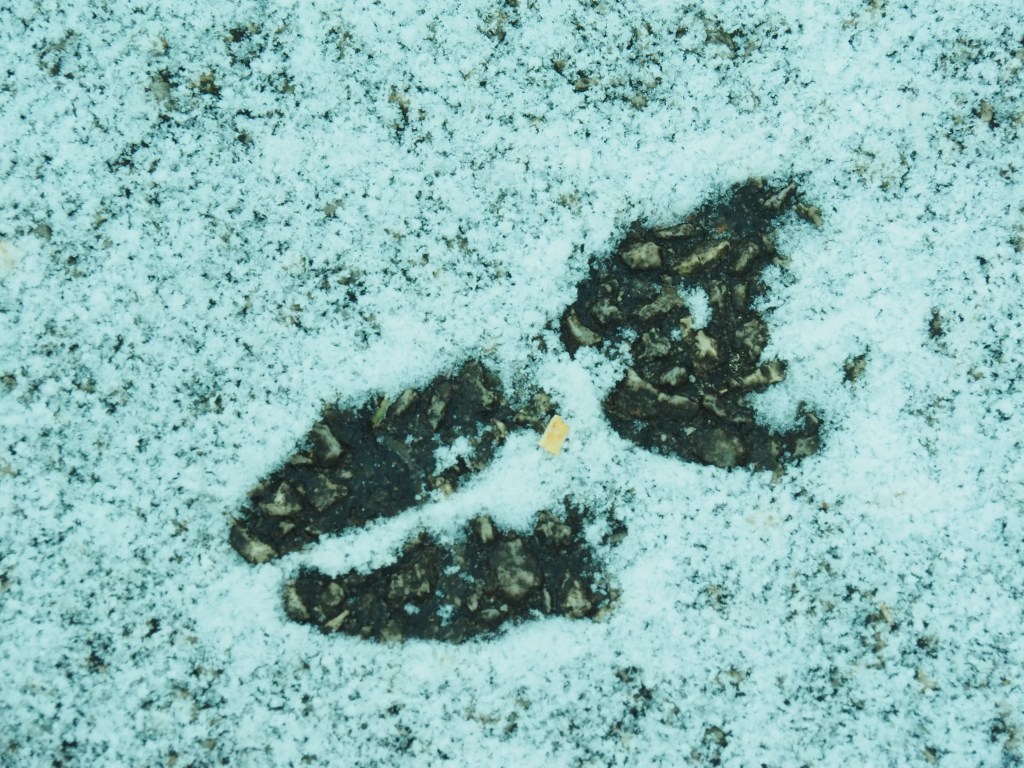
Some tracks are easy to identify. The long-fingered “hands” of a raccoon, the twin hooves of deer, the huge fork-like tracks of wild turkeys.
And then there are the look-alikes. To tell coyote and fox from dog, check the behaviour of the animal. If the tracks go here, there and everywhere, it’s an off-leash dog (no need to save energy!); if the tracks go more or less straight for a good stretch, it’s a coyote or fox, eating up the kilometres with an efficient trot, not deviating unless there is evidence of potential food.
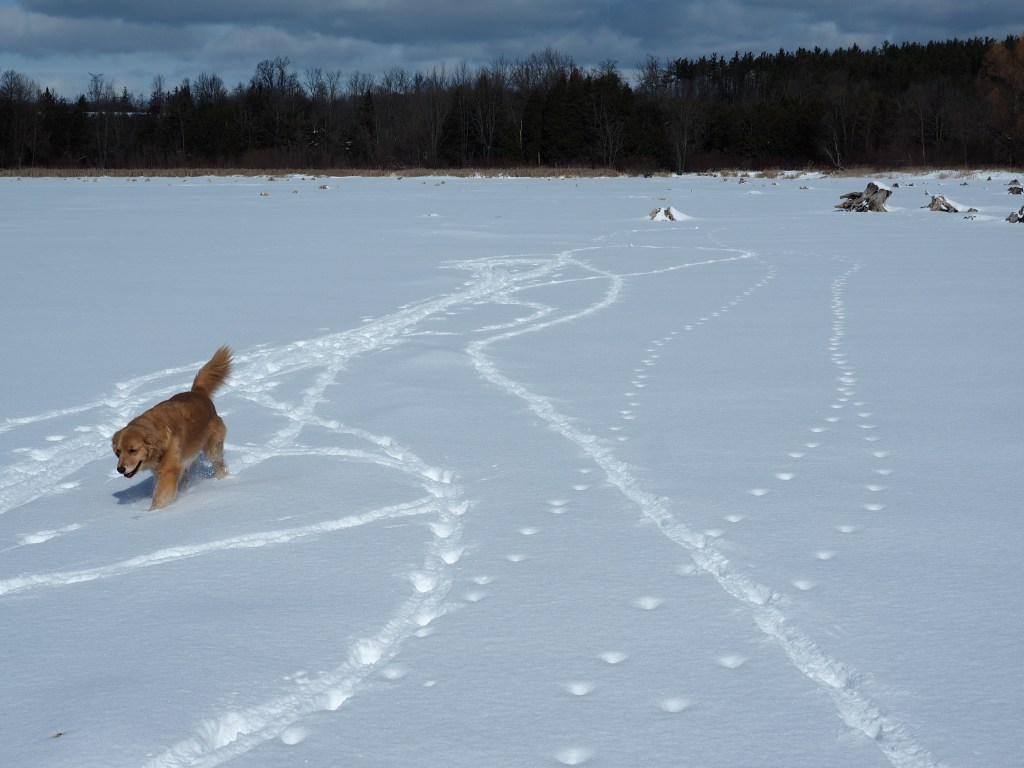
Sometimes the pattern, or gait, of an animal is a clue. Was it walking, trotting, bounding or galloping? Raccoons and skunks almost always walk, squirrels and rabbits are often bounding, foxes and coyotes trotting. And, of course, track size gives clues to how big the animal is. Also look for evidence of claws, tail-drag, fur or hairs left behind. Do the tracks disappear into a burrow?
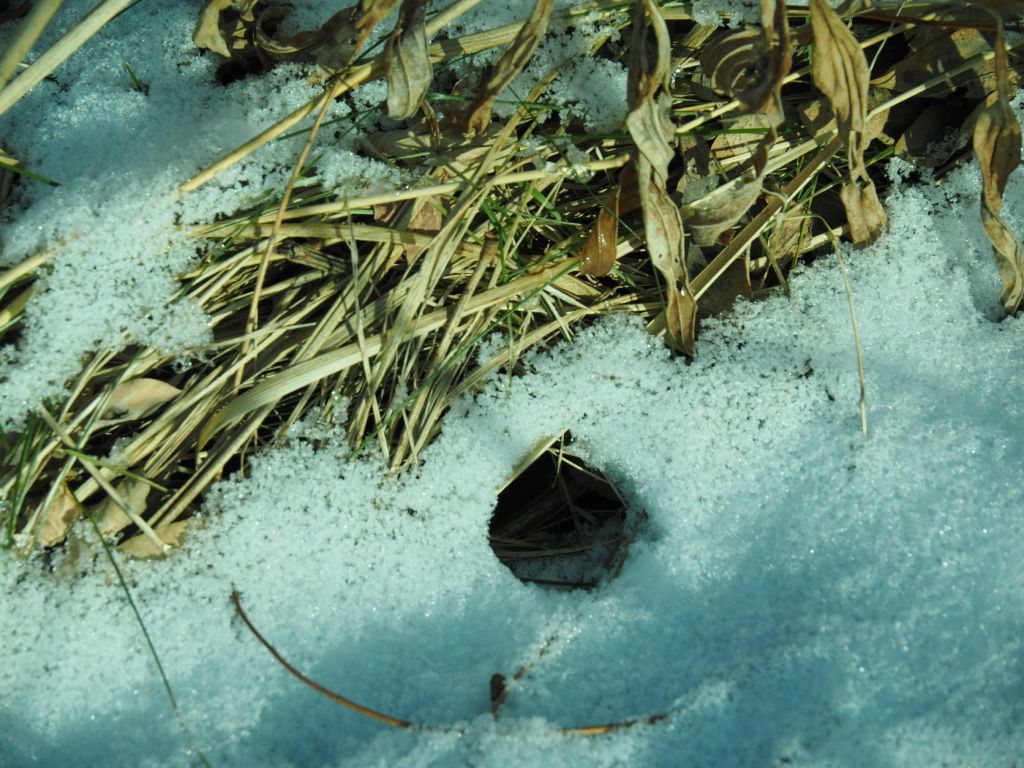

Shallow snow makes tracking easier, since the tracks are more defined, but it’s possible to make an educated guess in deeper snow. Having a field guide to tracks or using on-line resources really helps.
It’s great fun to follow a set of tracks. You can often figure out which way the animal was going, but even following a track backwards (“back-tracking”) reveals much. You may find out what the animal ate, where it bedded down, where it dashed away from a predator (or dashed at prey), and -yep- what its urine and droppings (scat) look like.
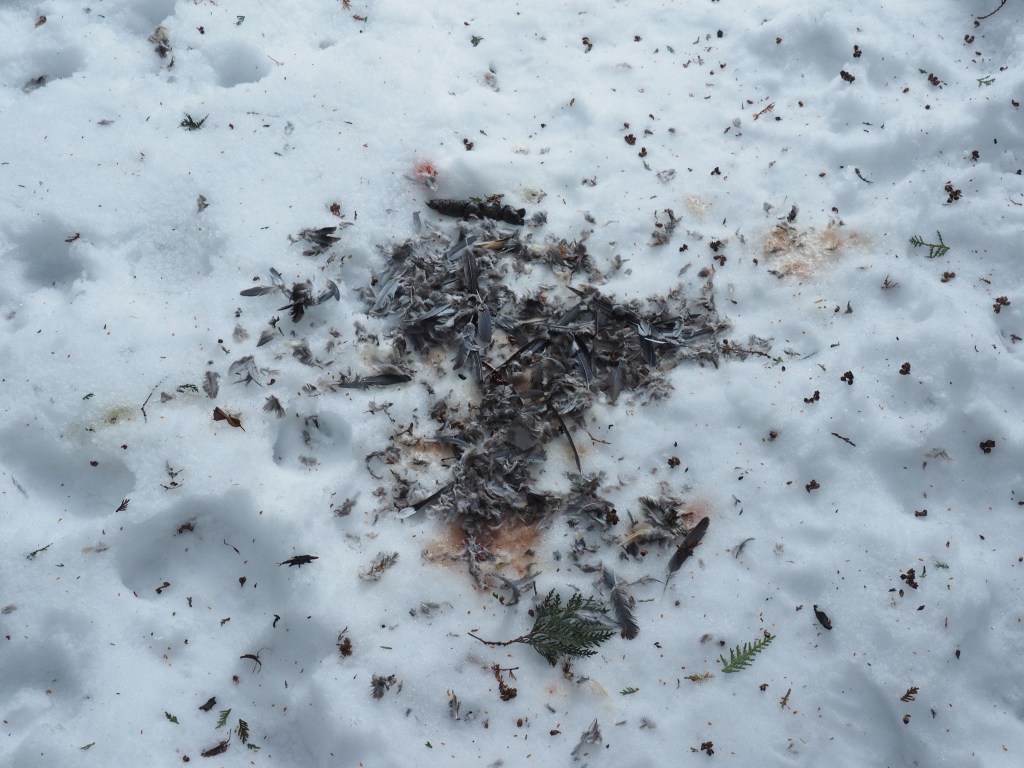
And sometimes you discover high drama. A mouse’s life ended in the talons of a hawk or owl; you know that because of the small trail which ends suddenly where the imprint of large wingtips stripe the snow. Another time you happen upon an unlucky rabbit’s remains, surrounded by red-stained snow and coyote tracks. I call some of these discoveries “murder mysteries,” but with respect since we are viewing nature’s circle of life, the food chain in action.
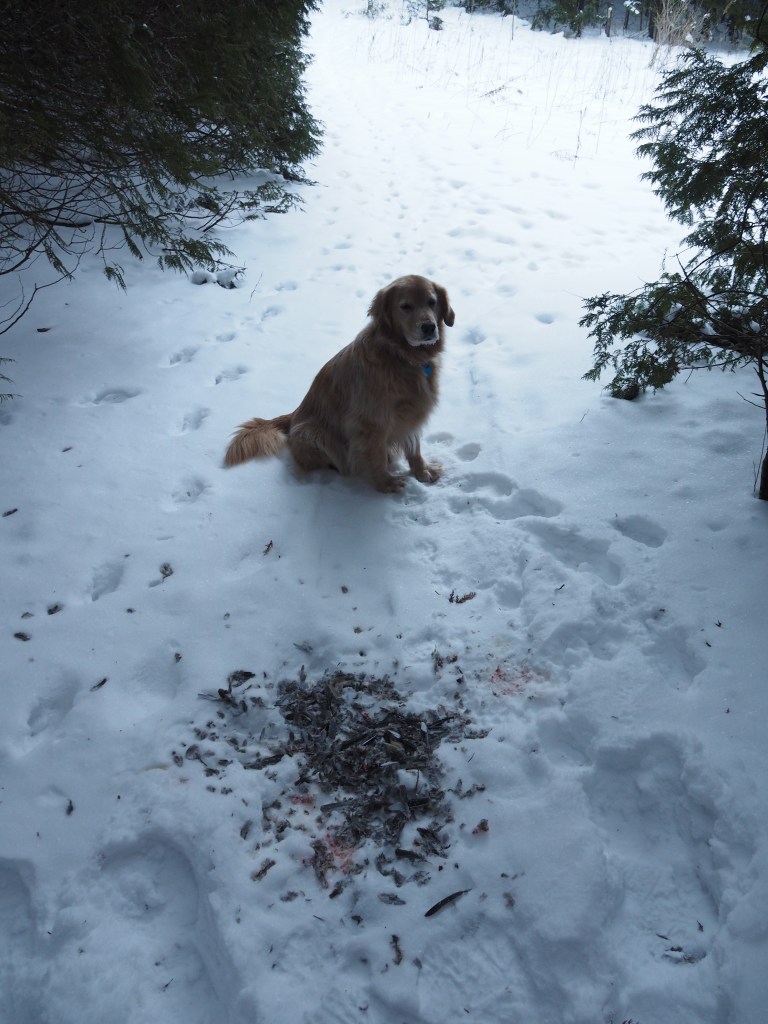
Tracking adds enjoyment to any outing, especially in winter. Kids love it. Happy Trails and Tracking!
To get started or learn more, check out these resources:
There are lots of good images on-line, just be sure to specify tracks in snow (vs mud or sand) and also Ontario to eliminate the many species that live elsewhere.
An expert local tracker, Tamara Anderson, has an excellent blog covering her tracking adventures (including some of Nature Guelph’s Tracking Club outings): https://natureguelphtracking.wordpress.com
The University of Guelph Arboretum has a great guide to local mammals and their tracks: https://arboretum.uoguelph.ca/educationandevents/id-sheets/mammals
Animal Tracks of Ontario by Ian Sheldon is a nice accessible field guide.
Larger guides, such as the Peterson Field Guide to Animal Tracks, and the best of all, Mammal Tracks and Sign by Mark Elbroch, have much more information but cover many species not found in our area.
 Dan the Nature Man